

Provisional injunctions
1. Outcomes of applications at first instance
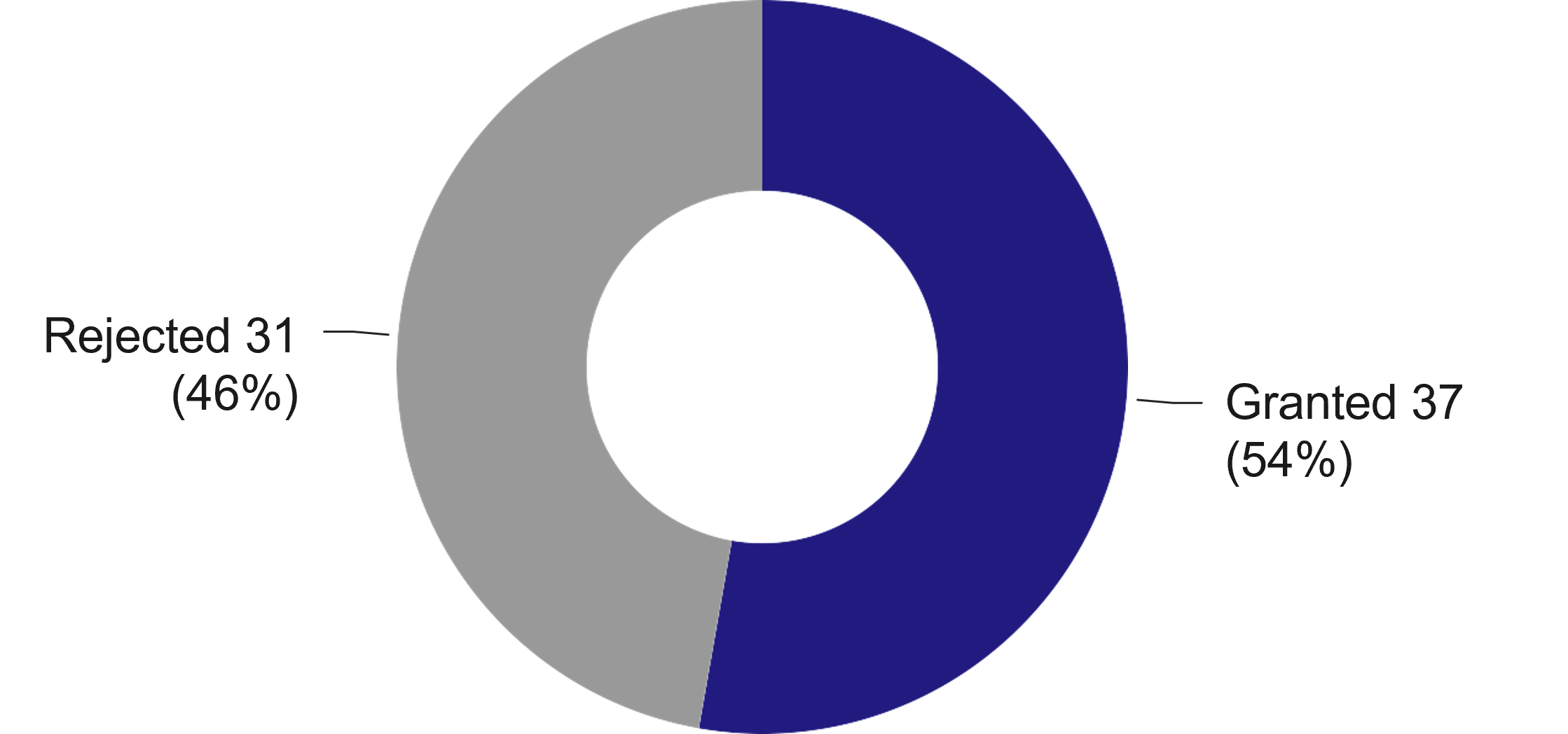
At the time of collecting the data, the Court of First Instance had published 68 orders on provisional injunctions. Provisional measures were granted in 37 decisions (54%) and rejected in 31 decisions (46%). Applicants were therefore slightly more successful than defendants.
2. Grounds for rejection
The 31 orders rejecting the applied measures were assessed by reference to the grounds stated in the orders.
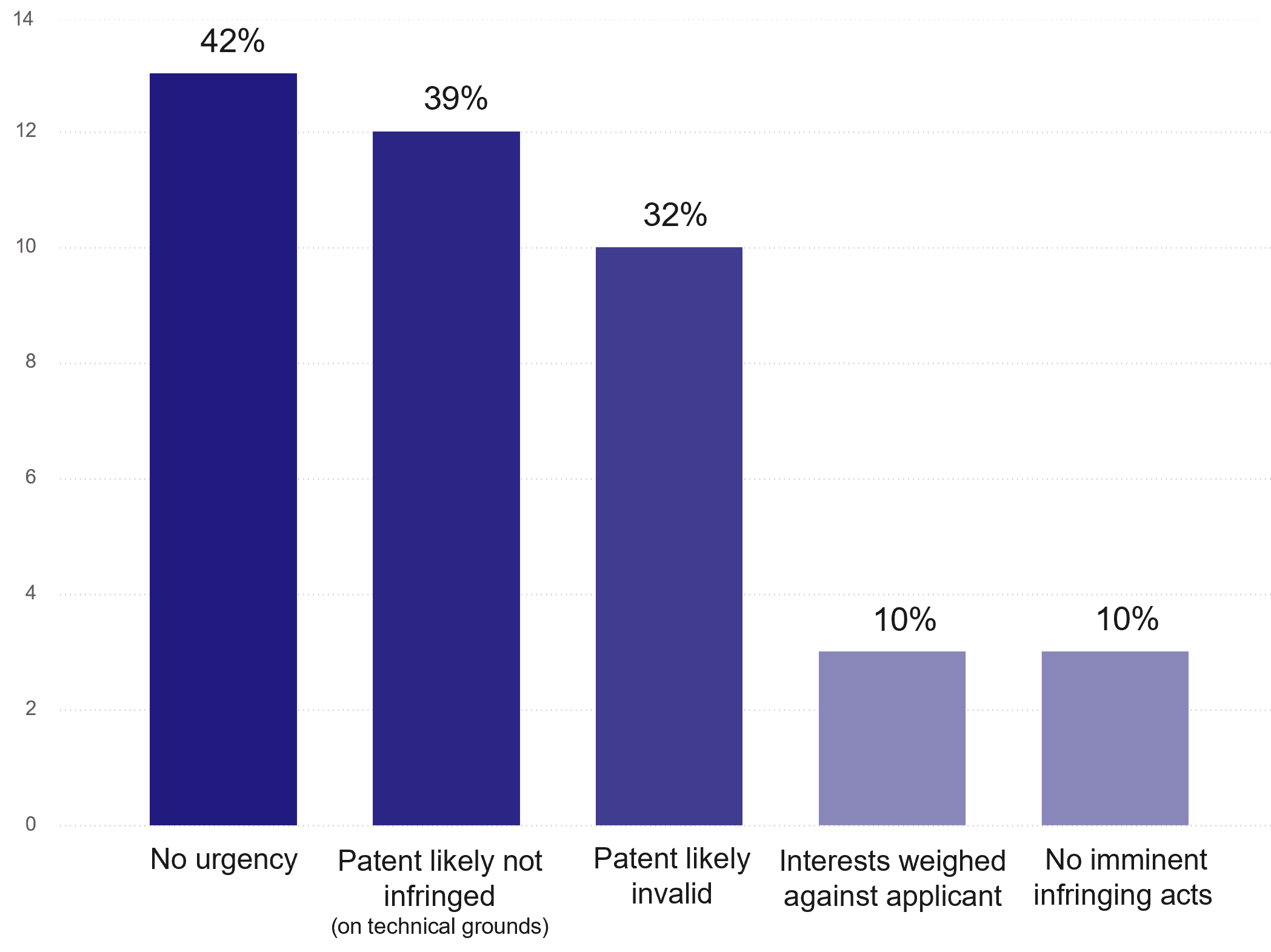
Lack of urgency was the most frequent reason for rejection and appeared in 42% of the orders. In 13 orders, the court was not convinced that an injunction was appropriate in view of the applicant's own conduct and the threatened harm.
Related to urgency, the finding of no imminent infringing acts appeared in three (10%) orders. This ground addresses the threat of infringing conduct rather than delay by the applicant. The two categories confirm the relevance of both the respondent's projected conduct and the applicant's procedural diligence.
Validity and infringement remained close behind urgency as reasons for refusing relief. An infringement defense was successful slightly more often (39%) than validity defenses (32%). This reflects the requirement for the applicant under Rule 211.2 RoP to satisfy the Court to a sufficient degree of certainty that it is entitled to seek relief based on validity and infringement of the patent.
Note that each distinct ground is counted separately. One order may therefore be relevant to multiple grounds (and therefore the sum of the percentages is more than 100%). The categories nevertheless show which legal issues were most frequently present in orders rejecting the measures, whether as the sole ground or as part of a combined assessment.
The interests were weighed against the applicant in 10% of the orders in which the measures were rejected. However, a panel that disposes of the application on urgency or the provisional merits may have no need to rely separately on the balance of interests. The recorded frequency may therefore understate its role in the overall reasoning.
3. Duration of first instance proceedings
3.1 Inter partes proceedings
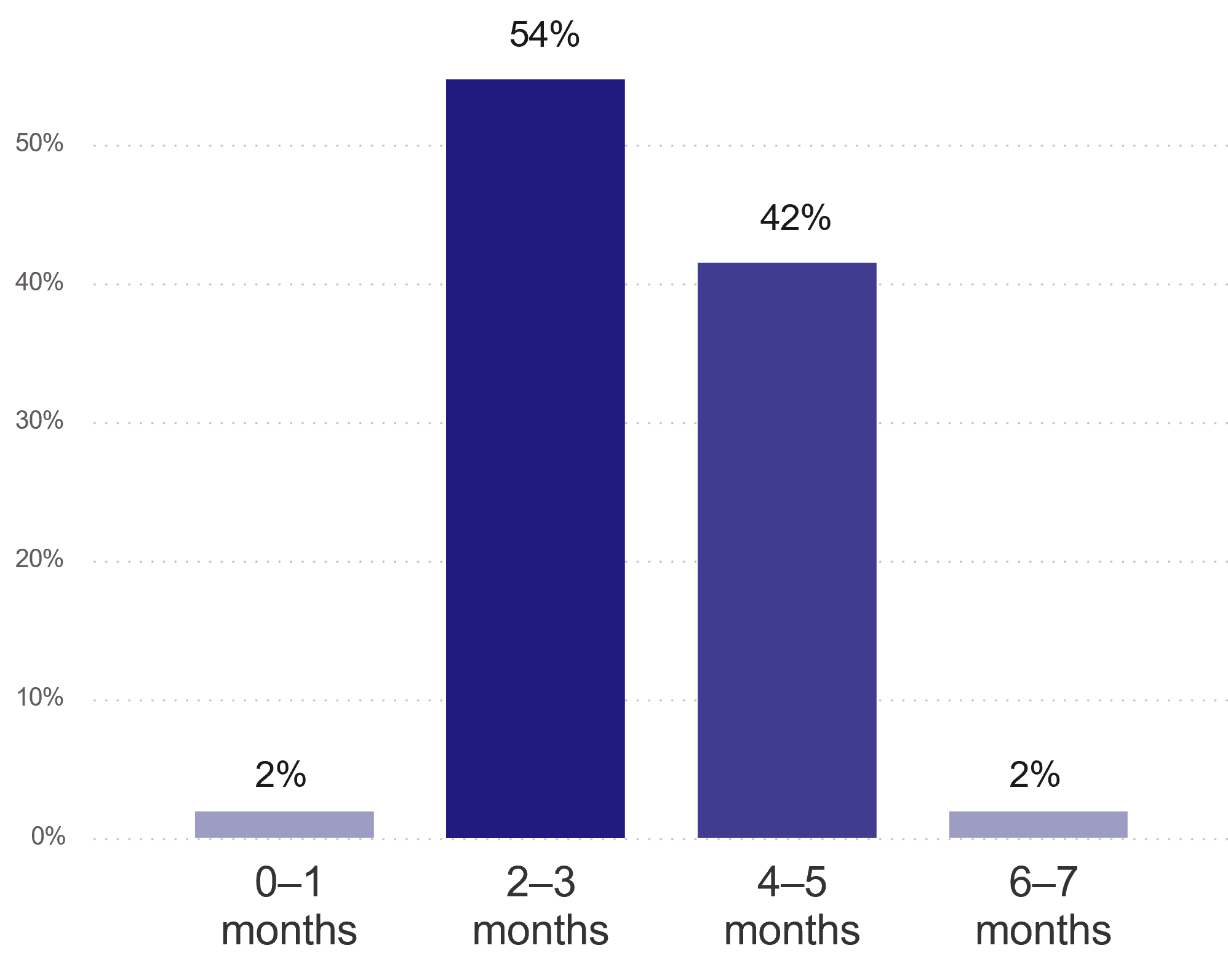
At the time of collection of the data, 52 inter partes orders were issued on provisional injunctions. More than half (54%) were issued within two to three months and 42% within four to five months. Only 2% were issued within one month, and 2% required six to seven months.
3.2 Ex parte proceedings
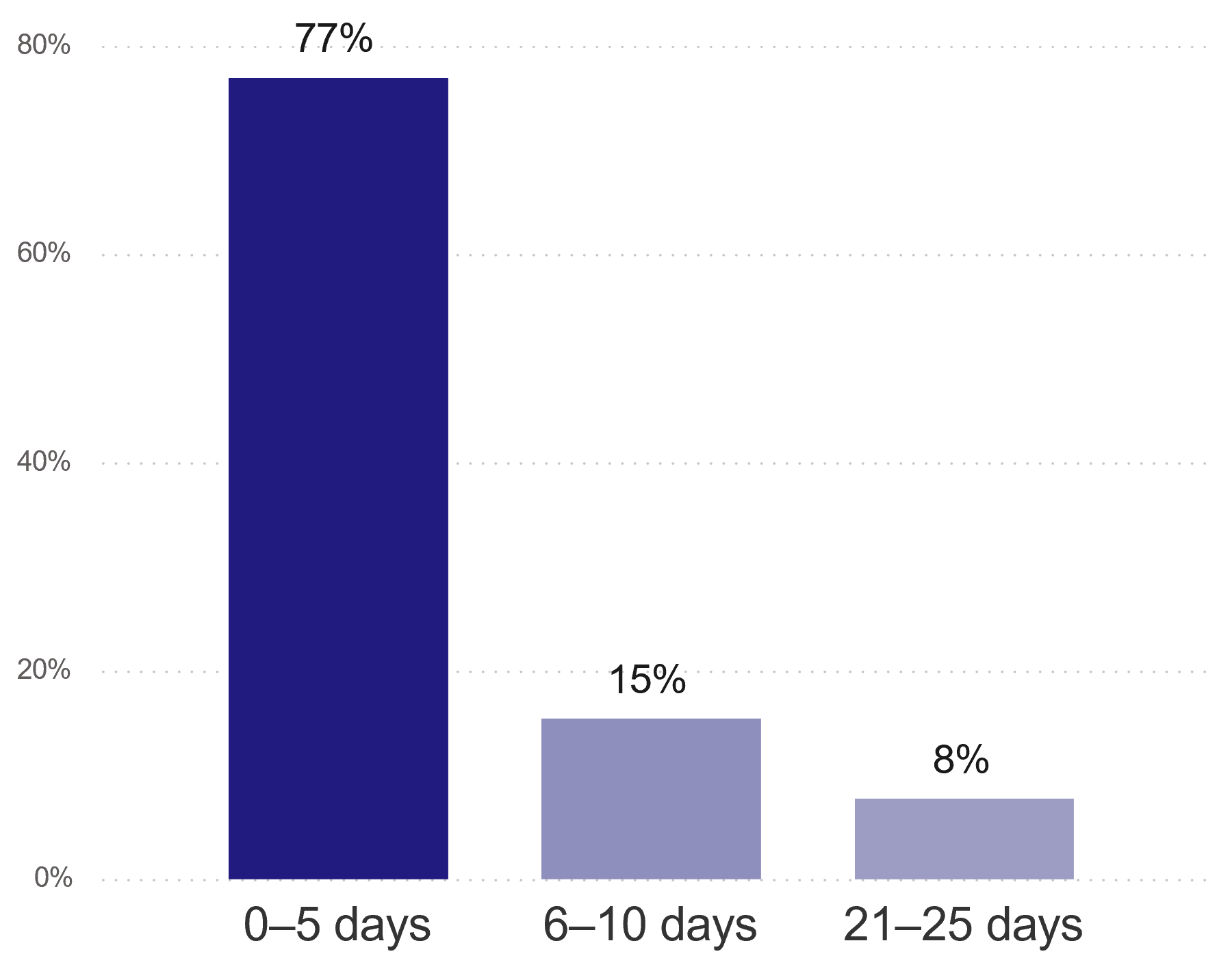
The dataset on ex parte PI proceedings contains 13 orders. Of the total, 77% were issued within five days, 15% within six to ten days and 8% within 21 to 25 days. 92% were therefore determined within ten days of formal receipt.
The ex parte procedure operates on a substantially different timetable from the inter partes procedure. The recorded durations remain consistent with ex parte orders providing relief on an emergency timetable where prior notice would risk defeating the purpose of the measure.
4. Appeal outcomes
The Court of Appeal dataset contains 21 decisions on the merits of applications for provisional measures under rule 220.1 (c) RoP. Six first instance grants were confirmed and six first instance refusals were confirmed. The overturning of a further six rejections resulted in a grant of a provisional injunction on appeal. Three initial grants were overturned with the result of revoking the injunction.
The Court of Appeal confirmed the first instance result in 12 decisions (57%) and changed it in 9 decisions (43%). In other words, almost half of the appealed first instance outcomes resulted in a different decision on the application on appeal.
First instance grants were somewhat more stable than first instance refusals. Six of the nine grants were confirmed (67%), and only three were set aside. The initial rejections split evenly between confirmation and overturning of first instance. An applicant that appealed a rejection obtained interim relief in 50% of the published merits appeals. A defendant that challenged a grant succeeded in revoking the measure in 33%.
The appeal statistics warrant cautious interpretation. They strictly concern orders that challenged the merits determination in first instance. They do not include all first instance orders and exclude appeals on the wider range of procedural issues that may arise around an application for provisional injunctions.
5. Appeal durations
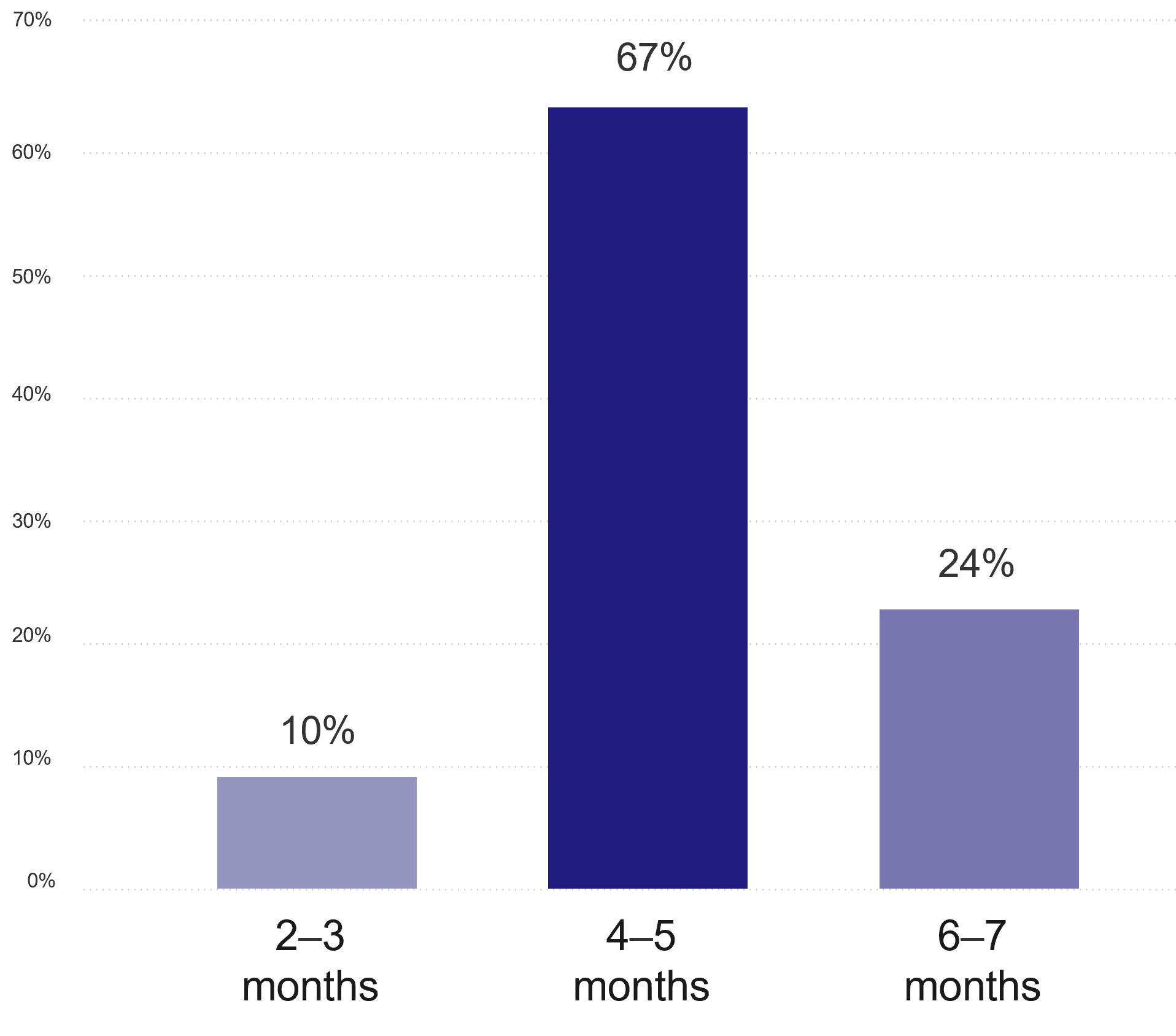
Of the 21 appeal decisions, 10% were decided within two to three months, 67% within four to five months and 24% within six to seven months.
Within this set, two thirds of the decisions fall within a four-to-five-month bracket. A further 24% required six to seven months. Therefore, 90% of the published appeal decisions took between four and seven months from formal receipt of the appeal to the final order.1
The duration of appellate review has practical implications for the value of the first instance order. An order obtained within days on an ex parte basis may remain as the operative measure for several months before the Court of Appeal determines the merits.
1 Based on exact calculation of summed totals, not rounded percentages: 90.476%
6. Applications for suspensive effect
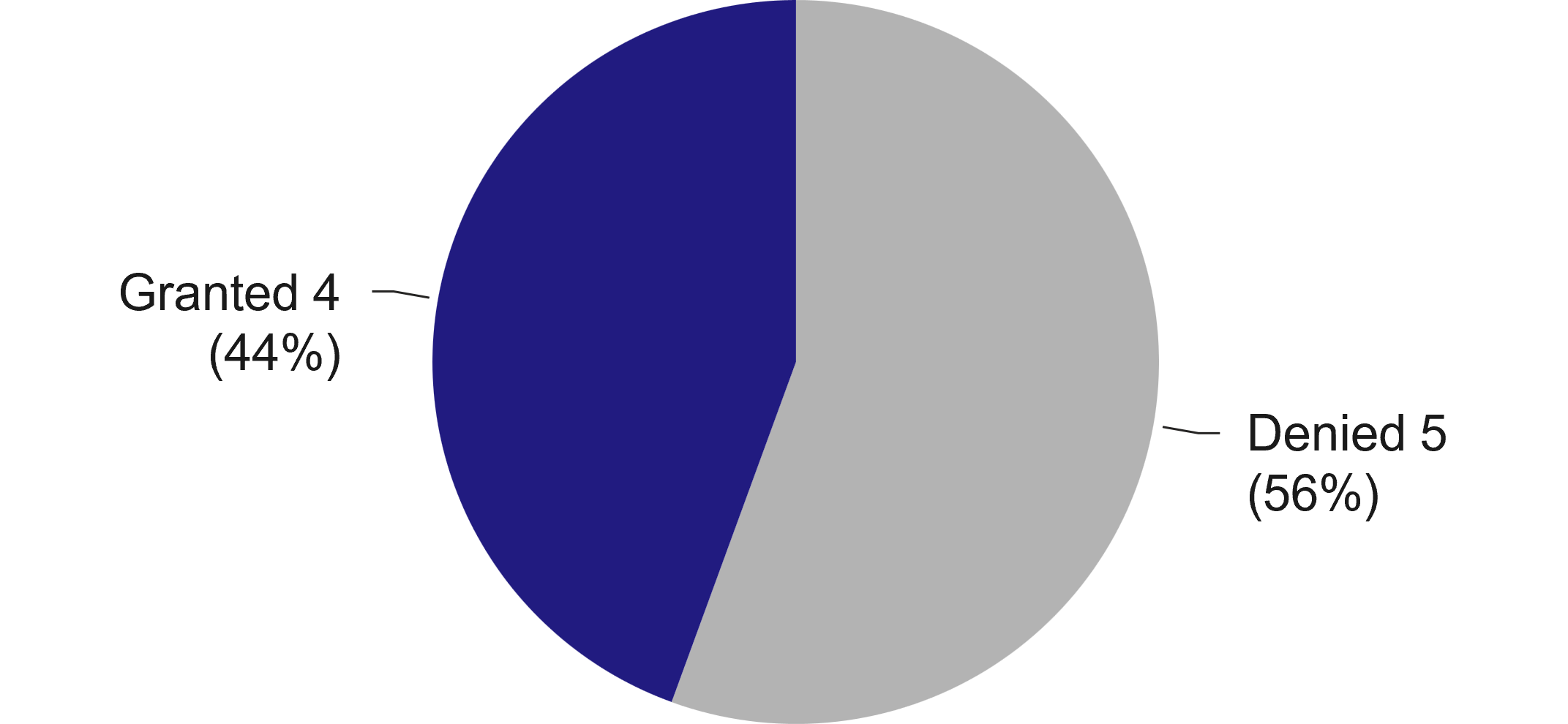
Applications for suspensive effect were filed in relation to 24% of orders granting a provisional measure. Suspensive effect was granted in four of the nine orders and denied in five. The defendants in first instance therefore obtained temporary protection against a provisional injunction in 44% of the recorded applications.
Across all 37 first instance grants, only four were subject to a successful temporary suspension. This represents approximately 11% of the grant orders. Therefore, a first instance provisional injunction usually remained in place.
The presented distribution supports a limited conclusion due to a narrow sample size: suspensive effect has been available in a minority of applications, but it has been denied slightly more often than granted.
7. Discussions and conclusions
This statistical analysis reflects that the UPC uses provisional injunctions moderately and only where the applicant demonstrates a concrete need for immediate intervention. The numbers also highlight that applications may be rejected on the provisional merits, temporal necessity and proportionality. The appeal data confirms that first instance outcomes remain open to review on the merits of the interim injunctions.
Any interpretation of the statistics should take their limited scope into account. The analysis includes published decisions and aggregated categories, while number of the appellate and suspensive effect orders remains small. The figures identify procedural patterns and litigation risks, but they do not predict the outcome of individual cases.
Further insight into the UPC's functioning and trends is provided through HOYNG ROKH MONEGIER's ongoing statistical analysis, published on a monthly basis, with regular updates shared on LinkedIn and on our website: HOYNG ROKH MONEGIER - Unified Patent Court.
Data Note
The statistics in this report are derived from HOYNG ROKH MONEGIER's internal database as of 3 August 2026. The first instance outcome analysis counts each order once. Percentages are rounded to the nearest whole number and may not sum to 100%. All graphs exclude applications disposed for lack of jurisdiction, anti-anti-suit injunctions and anti-interim license injunctions.
For grounds of rejection, each distinct ground is counted separately. An order that states more than one ground is included in more than one category. Each percentage uses the 31 rejected orders as its denominator.
Duration is measured from formal receipt to the date of the final order. The ex parte duration analysis excludes decisions by default. The appeal analyses include appeals on the merits of applications for provisional measures and exclude applications for preservation of evidence and matters that do not strictly concern the merits finding. The suspensive effect analysis applies the same merits-based scope.